Workspace Booking: The Complete Guide to Optimizing Your Offices

Workspace booking refers to the set of tools and methods that allow an employee to book a desk, workstation, or meeting room before arriving on-site. It addresses a very practical question: how can we ensure that everyone has a suitable space without wasting floor space or creating unnecessary daily friction? This guide explains why this topic has become strategic, what criteria to consider, and how a platform like SaaSOffice addresses it through its voice assistant, NOVA.
What is workspace booking?
Workspace booking is a system—usually digital—that allows an employee to book a workstation, a shared desk, or a meeting room in advance, before arriving at the office. It serves as the operational foundation for flex office and hybrid work.
In practical terms, this system addresses three needs: knowing where to work, avoiding conflicts of use among coworkers, and giving the company a clear picture of how its office space is being used.
A workplace experience platform centralizes space bookings, access control, and occupant services into a single application. It is this centralization that distinguishes a simple shared calendar from a true facility management tool.
Why Workspace Booking Has Become Essential in 2026
Flexible office arrangements have made bookings essential
The widespread shift to a flexible office model has eliminated assigned workstations. Without a booking system, employees find themselves searching for an available seat when they arrive, which leads to frustration and wasted time.
Field data confirms the scale of the phenomenon. The average office occupancy rate in France stands at 35 percent and does not exceed 63 percent even at the weekly peak on Tuesdays (Source: m-work). On average, one out of every two offices remains empty, making workspace bookings essential for aligning space allocation with actual usage rather than theoretical capacity.
The return to the office is moving forward, but remains hybrid
The return to the office has been accelerating since late 2024, though this does not call the hybrid model into question. 82% of French companies are already encouraging their employees to return to the office, and seven out of ten companies require employees to be in the office on certain days (Source: Bluedigo).
This shift is a game-changer for workplace teams: offices designed for a 55% occupancy rate sometimes have to accommodate 75% to 80% of the workforce on certain days. Without a reliable booking tool, this shift becomes unmanageable.
Hybrid work: A recognized driver of performance
Hybrid work is no longer seen as simply a concession granted to employees. 69% of managers say that hybrid work has improved their team's performance (Source: m-work).
However, this performance depends on how it is implemented: a flex office program that lacks proper support and clear booking rules has the opposite effect and undermines the employee experience.
How to Choose a Workspace Booking Tool
Bookings for Offices and Workstations
The first level of service involves booking an individual workstation or a shared office for a half-day or a full day. The tool must display real-time availability by floor, by area, or by type of space.
A good workspace booking system also allows you to cancel or modify a booking in just a few seconds, to avoid unnecessarily blocking workstations when other employees need them.
Meeting Room Bookings
Meeting room management is often the most visible source of friction in a company. Double bookings, rooms booked but not actually in use, or incorrectly listed capacities directly undermine the employee experience.
An integrated solution should synchronize room bookings with each person's work calendar and automatically release an unused room after a few minutes. For a detailed overview of this module, the SaaSOffice space booking page outlines the available options for rooms, flexible desks, and events.

Centralize bookings through an intelligent voice assistant
Beyond simple scheduling, some platforms go a step further by integrating a voice assistant capable of handling workspace bookings with a simple voice command. This is the approach taken by SaaSOffice with its AI assistant, NOVA, which allows users to book a desk or a meeting room or report an issue without having to navigate a complex interface.
An intelligent voice assistant used in the workplace simplifies the process of booking workspaces by eliminating the steps between an employee’s intention and the resulting action. This approach reduces day-to-day friction, particularly for employees who are unfamiliar with digital tools.
The Tangible Benefits of a Workspace Booking Solution
Optimize the actual office occupancy rate
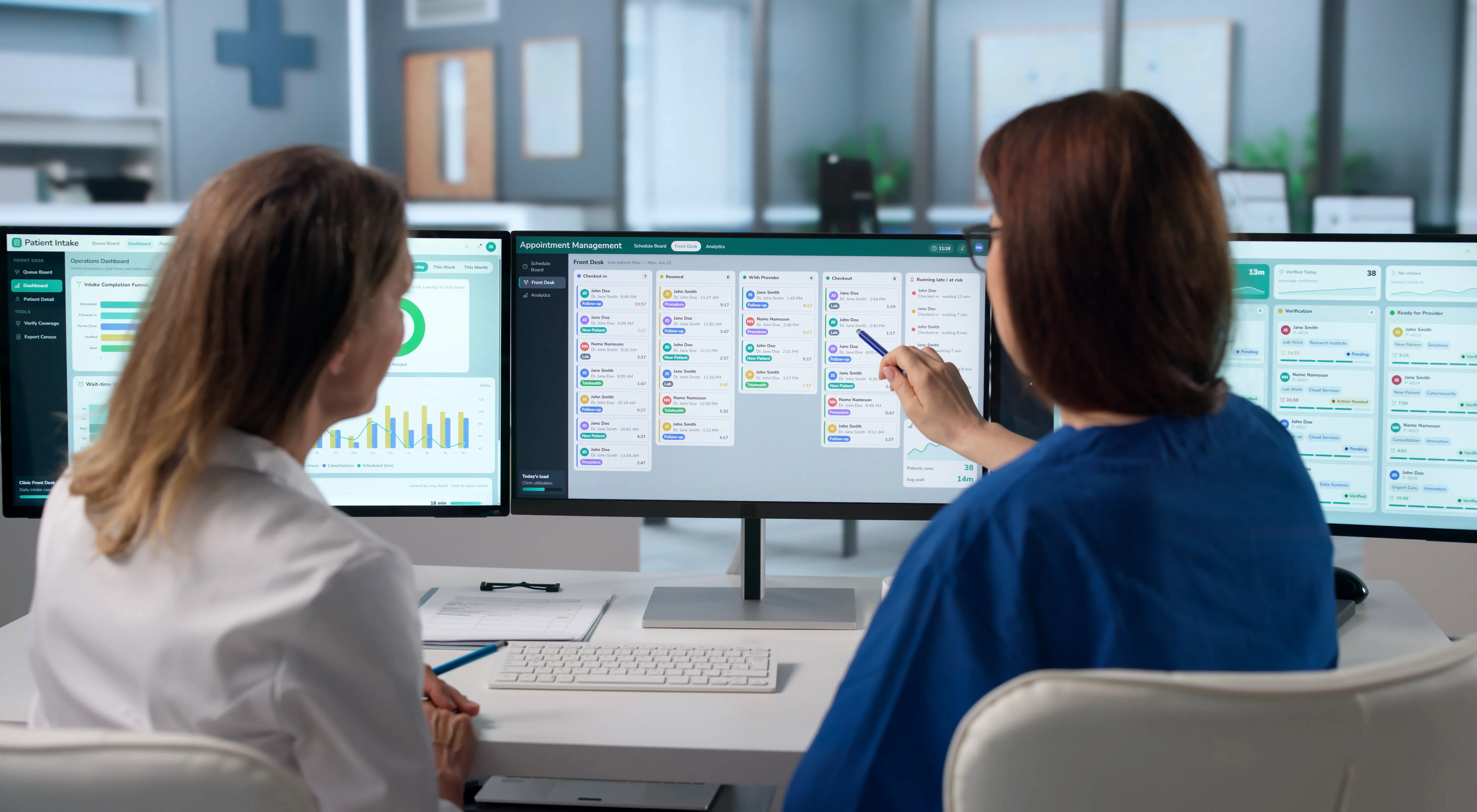
Booking data, combined with occupancy sensors, provides a precise picture of the actual use of each space. This insight helps facilities teams adjust the number of workstations based on the observed occupancy rate, rather than on a rough estimate. The reporting and management module aggregates this booking and occupancy data into a single dashboard that facility managers can use.
Enhancing the Employee Experience
An employee who knows, even before arriving at the office, that a workstation and a room are waiting for them feels more at ease and works more efficiently. Workspace booking thus reduces the uncertainty associated with flexible office arrangements, which is often cited as the main barrier to their acceptance.
Reducing Real Estate Costs
By adjusting floor space to actual occupancy rather than a theoretical headcount, companies reduce their real estate footprint without compromising working conditions. This approach is also consistent with a commitment to energy efficiency and environmental responsibility in commercial buildings.
Workspace Booking: A Cornerstone of the Workplace Experience
SaaSOffice offers a workplace experience platform that combines workspace booking, access control, visitor management, and incident handling into a single environment. This centralized approach eliminates the need for teams to juggle multiple disconnected tools.
At the heart of this platform, NOVA serves as a single point of access: an employee can ask NOVA to book a room for 2:00 pm, check the availability of a workstation in another building, or report a technical issue —all using natural language.
Workspace bookings are also integrated with the platform’s other modules: access control secures entry to booked workstations, and the visitor management system allows an external guest to be added to a room booking without requiring any additional steps on the organizer’s part.
SaaSOffice, through its NOVA assistant, transforms workspace bookings into a simple interaction rather than an administrative task. For facility managers, this means reliable and actionable occupancy data, without requiring any additional data entry from users. This approach is primarily intended for corporate headquarters and commercial spaces; details about this solution can be found on the Offices & Headquarters page.
In conclusion
Work space bookings are no longer just a nice-to-have: they form the operational foundation of any well-designed hybrid work environment. With average occupancy rates remaining low, a accelerating return to the office, and increasingly high employee expectations, companies that properly structure their workspace bookings gain a competitive edge—both in terms of real estate costs and the experience they offer their teams.
To explore the topic of the on-site employee experience in greater depth, the article " How to Transform the Office into a Place Where Employees Want to Return " expands on the ideas discussed here.
FAQ: Workspace Booking
What is workspace booking software?
Workspace booking software is an application that allows employees to book a desk, workstation, or meeting room before they arrive on site. It centralizes real-time availability and provides occupancy data used by facilities management teams. SaaSOffice offers this feature through its NOVA assistant.
What is the difference between a flexible office and booking workspaces?
Flex office is a work arrangement in which workstations are not permanently assigned. Workspace bookings are the tool that makes this arrangement work in practice, allowing everyone to find and book an available spot.
How much does a workspace booking tool cost?
The cost depends on the number of employees, the number of locations, and the features included, such as access control or visitor management. Comprehensive platforms like SaaSOffice are typically billed on a monthly subscription basis, calculated based on the number of active users.
Does the workspace booking system work across multiple locations?
Yes, a well-designed workspace booking solution manages multiple buildings and cities from a single interface. This allows an employee on the go to book a workstation at any of the company’s locations, with centralized visibility for workplace teams.
How does a voice assistant like NOVA improve the process of booking workspaces?
A voice assistant like NOVA lets you book an office or a meeting room with a simple voice command, without having to navigate through an interface. This approach speeds up the day-to-day booking of workspaces and makes it accessible to employees who are less comfortable with traditional digital tools.
What metrics should you track to optimize your workspace bookings?
The key indicators are the actual occupancy rate, the vacancy rate (available seats relative to the total number of seats), and the booking cancellation rate. When analyzed over time, these indicators help adjust the sizing of spaces and the booking policy.
Photo credit: Andrey Popov, insta_photos - stock.adobe.com