How to Turn the Office into a Place Where Employees Want to Come Back

Understanding what motivates employees to choose the office over working from home is the first step toward creating the conditions for a sustainable return to the office. Mandates alone don’t work. Companies that have forced a return to the office have often seen a decline in engagement—or even employee turnover. The solution lies in enhancing the workplace experience, smarter management of employee presence, and digital tools capable of transforming the office into a place where employees genuinely want to be.
Since the widespread adoption of remote work, companies have faced a major challenge: their offices are underutilized, even though these spaces represent one of their biggest cost centers. The average office occupancy rate in France stands at 35%, meaning that 65% of available space is unused. The average peak occupancy rate in France reaches only 56%; in other words, approximately 44% of workstations remain empty even during the busiest hours. During off-peak hours, the rate drops back to 35%. This reality reflects a profound shift in how people relate to the office and presents a significant opportunity for optimization: fixed rent, energy costs, and maintenance expenses are all areas that can be streamlined. (Source: Republik Workplace)
Understanding Employees' New Expectations Regarding the Office
Remote work has redefined expectations
The health crisis has confirmed what many had long suspected: the majority of office tasks can be performed remotely. According to INSEE, more than one in five private-sector employees worked remotely during the first half of 2024, at a steady rate of about two days per week. Sixty percent of remote workers say they are more productive at home than at the office, and 64% save an average of 4 hours per week by eliminating commutes. (Source: INSEE / HelloWorkplace)
Spaces to Be Reinvented for Today's Hybrid Work Styles
Many companies still have workspaces designed for a full-time on-site model: long rows of assigned desks, few collaborative spaces, outdated meeting rooms for video conferencing, and access control systems designed for a time when everyone came in every day. Yet, the more an employee finds their workspace attractive and pleasant, the higher their level of well-being and engagement. There is a direct correlation between the quality of workspaces and the desire to come to work. (Source: Ifop)
Adapting spaces to actual usage therefore directly influences attendance rates: an employee who can easily find an available room, whose team is present that day, and whose desk is booked in advance, has every reason to return. A positive experience reinforces the desire to make the trip to the office.
The presence of coworkers: the main reason for coming to the office
One of the most powerful motivations for coming to the office is to see colleagues. Social interaction is the top reason for coming to the office, cited by 48% of Parisians. In a hybrid work model, coordinating attendance becomes a strategic challenge: when employees know in advance who will be in the office on a given day, they plan their visits accordingly, and the attendance rate naturally increases. (Source: Ifop)
Visibility into attendance creates a virtuous cycle: the more employees plan their visits together, the more the office is filled with positive experiences, and each trip to the office is justified by high-value interactions.

The quality of the work environment: a decisive factor
Beyond organization, the quality of day-to-day life at the office carries significant weight. A repaired printer, enough electrical outlets, a meeting room at the right temperature, a working access badge—these are all details that shape the overall workplace experience. Taken individually, each seems trivial. Taken together, they form the foundation of trust that makes people want to come back.
An employee whose requests are handled quickly and who finds their equipment in good working order views the office—and the company that employs them—in a very different light. Operational responsiveness is a form of consideration.
Challenges for the Company: Real Estate, Engagement, and Performance
Office underutilization has very concrete and measurable consequences across several dimensions of organizational performance. Clearly identifying these consequences also means assessing the potential for value creation that better space management offers.
Significant potential for real estate optimization
The average cost of a workstation in France was 11,051 euros per workstation in 2023. Real estate alone accounts for 61% of this budget, or 7,708 euros per workstation. With an actual occupancy rate of 35%, the potential for savings is considerable. For a company with several hundred employees, optimizing office space can result in savings of several million euros per year. (Source: IDET).
To realize this potential, real estate decisions must be based on reliable data. Between 30 and 50 square meters per workstation could be freed up without any loss of performance if spaces were properly redesigned, provided that actual usage is continuously monitored. (Source: ADP Group)
The driving force behind social cohesion and corporate culture
The office is much more than just a workspace. It’s a place for socializing, sharing values, and having informal interactions that foster innovation and team cohesion. Investing in an attractive office means investing in high-value interactions.
Studies on employee engagement consistently show that the quality of workplace relationships is one of the top factors in employee retention. When an employee has positive relationships with their colleagues, they are seven times more likely to feel engaged in their work. A vibrant and lively office is a powerful driver of employee retention. (Source: Sparkbay)
Structuring the Coordination of Hybrid Teams
In hybrid mode, collective performance depends on active coordination of in-office attendance. A model stabilized around a 3-days-in-the-office/2-days-remote schedule only achieves its full potential with the right tools. Coordinated attendance schedules, spaces booked in advance, and well-equipped hybrid meetings: every improvement in these areas directly translates to better collaboration and a greater desire to come into the office. (Source: Ifop)
How to Encourage Employees to Return: Practical Strategies
The solution to the exodus from offices lies not in coercion, but in making them attractive. The goal is to make the office a desirable, functional, and well-organized place. Here are the most effective strategies.
Rethinking Spaces for Hybrid Work
The office of 2026 is no longer just a collection of individual workstations. It must offer a variety of spaces suited to different types of activities:

- Quiet, well-equipped study areas designed for individual work that requires a high level of concentration.
- Open, easily reconfigurable collaboration spaces for creative sessions and teamwork.
- Hybrid meeting rooms equipped with high-quality audio-visual systems, ensuring that hybrid in-person/remote meetings run smoothly.
- Informal, relaxing spaces where employees can gather spontaneously.
A well-thought-out layout sends a strong message: the office was designed for today's needs, not yesterday's.
Implement a clear hybrid work policy
Ambiguity is the enemy of a successful hybrid organization. Employees need to know what is expected of them: how many days in the office, on which days, and for what types of activities. Striking this balance is only possible with a hybrid policy developed in collaboration with the teams, not one imposed from above.
Enhancing the Employee Experience in the Office
The office experience must be flawless. In 2025, spending on employee services jumped by 32%, reaching 957 euros per person. This increase reflects a fundamental trend: companies are investing in spaces that embody their culture —concierge services, dining, sports, and sustainable transportation. As Séverine Pilverdier, president of IDET, puts it: “The return to the office isn’t something that can be mandated; it has to be desired.” (Source: Culture RH)
Digitizing Space Management with SaaSOffice
This is the most transformative tool. SaaSOffice is a SaaS platform for building management and employee experience that addresses several of the issues identified above simultaneously, all from a single cloud-based application:
- Advance bookings for offices and meeting rooms, which eliminate scheduling conflicts and ensure that every employee can find a space that meets their needs.
- The ability to see when colleagues are in the office, which allows you to plan your visits to the office based on who you want to work with.
- Incident reporting and real-time monitoring via the dedicated SaaSOffice module, with SLA compliance metrics, to improve building maintenance and service quality.
- Collection of real-time occupancy data, which enables the optimization of space and informed real estate decisions.
- Simplified access to all building services —catering, visitor reception, parking, and access control—from the single SaaSOffice interface.
SaaSOffice currently manages more than one million square meters and has 28,000 daily users.
SaaSOffice: The Platform That Brings Employees Back to the Office
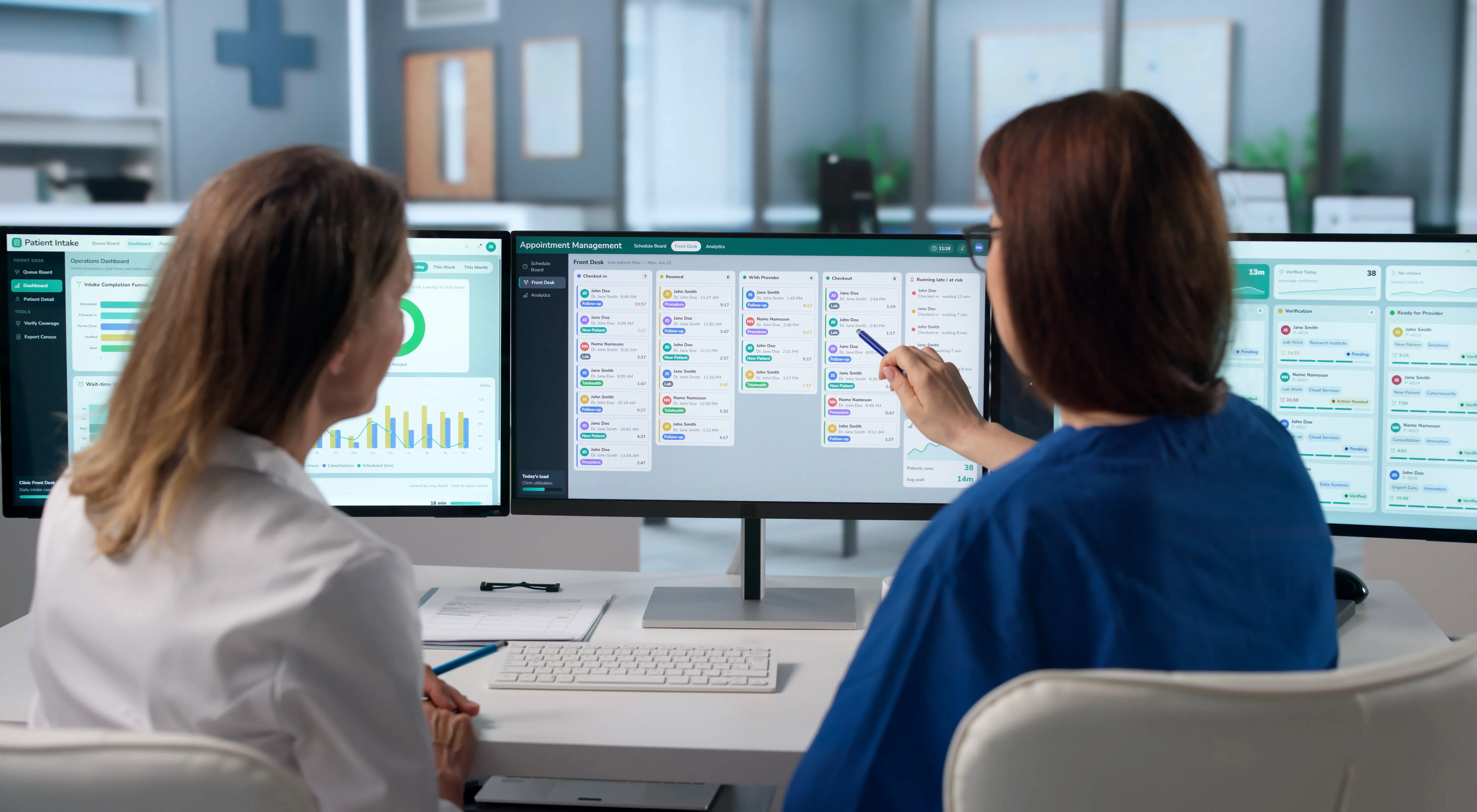
SaaSOffice is a SaaS application for building management and employee experience designed to address these challenges head-on. Designed for companies that manage large-scale workspaces—whether a single headquarters or a multi-site network—it brings together all the services needed for a seamless and enjoyable employee experience on a single cloud platform.
An all-in-one platform for the workplace experience
While most companies juggle several disparate tools—one for room bookings, another for incidents, and a third for access control—SaaSOffice offers a centralized solution. Employees can access all services from a single interface, which greatly simplifies their day-to-day work and encourages adoption.
The platform is built around three main features:
- Incident Management: Employees can report any issues directly through the app, and facility management teams can track resolutions in real time using SLA compliance metrics. No more lost emails or unresolved outages.
- Access Management: SaaSOffice secures and simplifies access for occupants and visitors across the entire real estate portfolio by integrating with the leading access control systems on the market (sTid, Welcomr, Sezaam, etc.).
- AI Personal Assistant: An intelligent assistant, accessible via voice or text, that radically simplifies the user experience by allowing every employee to interact with their building’s services in a natural and intuitive way.
Native integrations for a comprehensive ecosystem
SaaSOffice does not operate in isolation. The platform natively integrates with a wide range of third-party solutions, including Microsoft 365 for calendar synchronization and room bookings, as well as solutions for food services, electric vehicle charging, printing, payments, mobility, and building management systems (BMS). This openness allows each company to build a digital environment that precisely meets its needs.

Data to Manage Occupancy and Reduce Costs
Beyond the user experience, SaaSOffice is a management tool for real estate departments and facility management professionals. Real-time data on space usage helps identify underutilized areas, adjust services to actual foot traffic, and make real estate decisions based on objective data.
A solution tailored to all real estate contexts
Whether you manage a single headquarters, a multi-building campus, rental properties, or hospitality spaces, SaaSOffice adapts to your setup. The platform is built on a modular model: you activate the features you need and scale your subscription as your business grows. With over one million square meters under management and 28,000 daily users, SaaSOffice has proven its ability to scale in complex and demanding environments.
Best Practices for a Successful Return to the Office
Technology is a tool, not a solution in and of itself. Here are some best practices to implement to support a sustainable and effective return to the office.
- Measure to improve: analyze actual occupancy rates, identify the busiest days and spaces, and gather employee feedback through regular surveys. Data is the starting point for any sustainable improvement.
- Engaging front-line managers: A manager who comes into the office regularly and establishes routines for being present is the primary source of energy. Fifty percent of employees who have left a job cite their relationship with their manager as a determining factor. The manager sets the tone.
- Create group activities around the office: team seminars, lunches, creative workshops, and events. These experiences, which can only be enjoyed in person, are the most powerful reasons to fill the offices.
- Highlight the improvements made: every renovated space, every new service, and every incident resolved quickly deserves to be shared. Employees choose to come to work when they know their experience will be better than before.
- Measure and iterate continuously: hybrid work is constantly evolving. Practices that work today may need to be adjusted in six months. Establish a continuous feedback loop with your employees.
Conclusion
The return to the office is, above all, a matter of appeal. Employees choose to come in when the space offers them what they can’t find elsewhere: colleagues, collaboration, quality services, and an impeccable work environment. Meeting these conditions requires careful consideration of space design, a clear hybrid policy, and digital tools capable of streamlining daily life.
Companies that successfully transition back to the office are those that have made the office a more desirable, vibrant, and useful place. This involves a seamless experience, services that meet expectations, visibility into colleagues’ presence, and a well-maintained and well-managed work environment.
This is precisely what SaaSOffice enables: transforming the office into a positive, measurable, and optimizable experience, so that employees come because they find real value there, and because they genuinely want to return.
Photo credit: Daria, Drazen, Nicholas Felix/peopleimages.com, Zamrznuti tonovi – stock.adobe.com