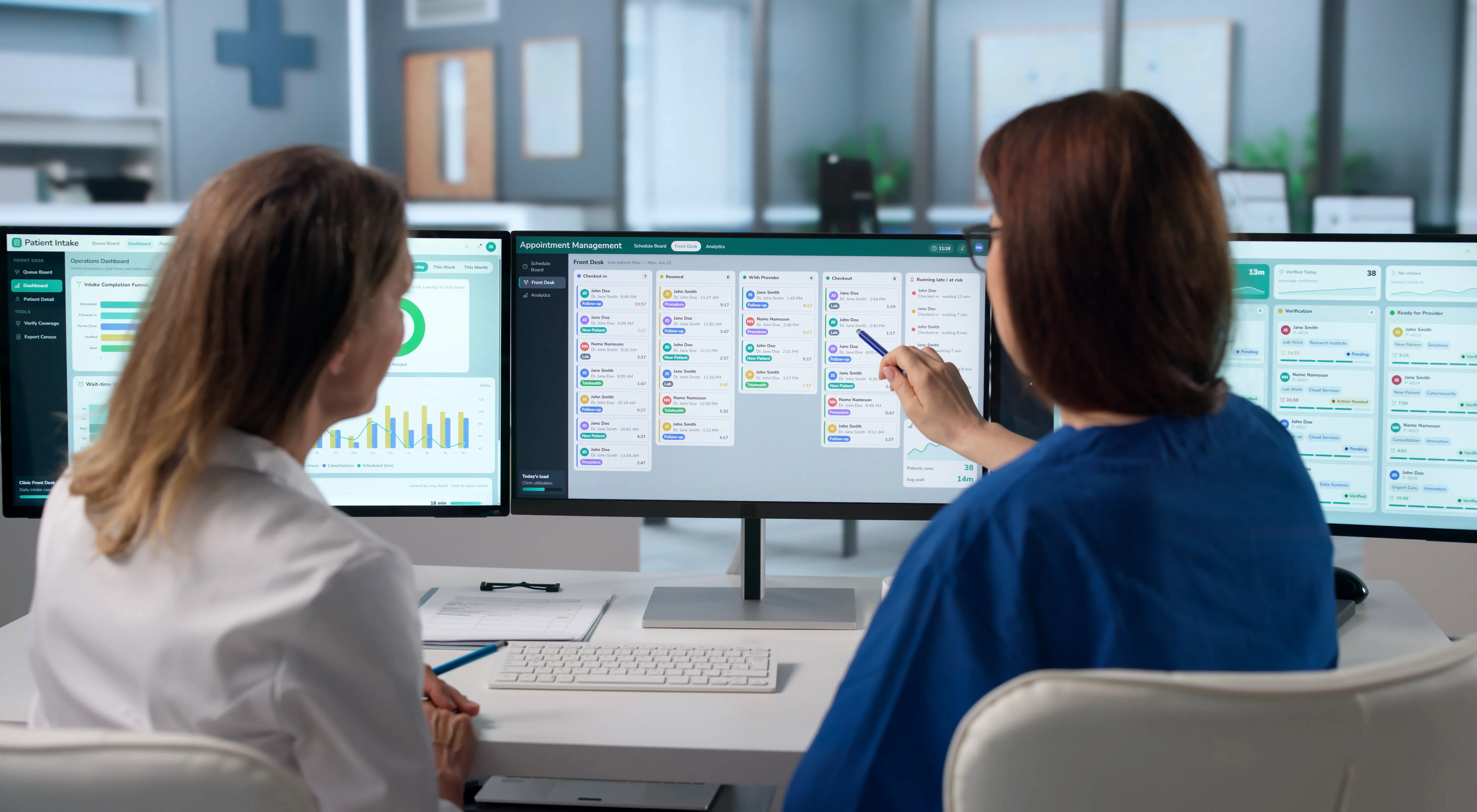
Workspace Management: How Your Offices Reflect Your Corporate Culture

You’ve drafted your values charter.
You highlight it in your job postings, annual reports, and investor presentations. What’s less well known is that your office spaces also convey these values—often with even greater impact than any speech.
The work environment is the first tangible signal perceived by your employees, candidates, and partners.
Taking care of it means transforming an often underutilized asset into a true driver of performance.
Why Your Workspaces Send a Strong Message to Your Teams
What Your Office Says About You Before You Even Speak
Employees form their opinions of corporate culture based on their day-to-day experiences: Are they able to work under good conditions? Does their work environment reflect trust and respect?
These perceptions are formed long before any official meeting takes place. According to the Actineo Barometer, 45% of French employees believe their employer does not care about their well-being at work.
42% feel engaged and do what is asked of them—nothing more. This proportion is particularly pronounced among 18- to 34-year-olds, for whom the office is a choice, not an obligation.
For companies that choose to take action, this represents just as many opportunities to stand out. A well-designed space does more than just improve comfort: it communicates values, strengthens a sense of belonging, and directly contributes to the company’s appeal.
The Measurable Impact of an Environment Aligned with Your Culture
Companies that invest in aligning their values with their workspaces reap concrete and measurable benefits:

How to Design Spaces That Reflect Your Values
Focus on values, not square meters
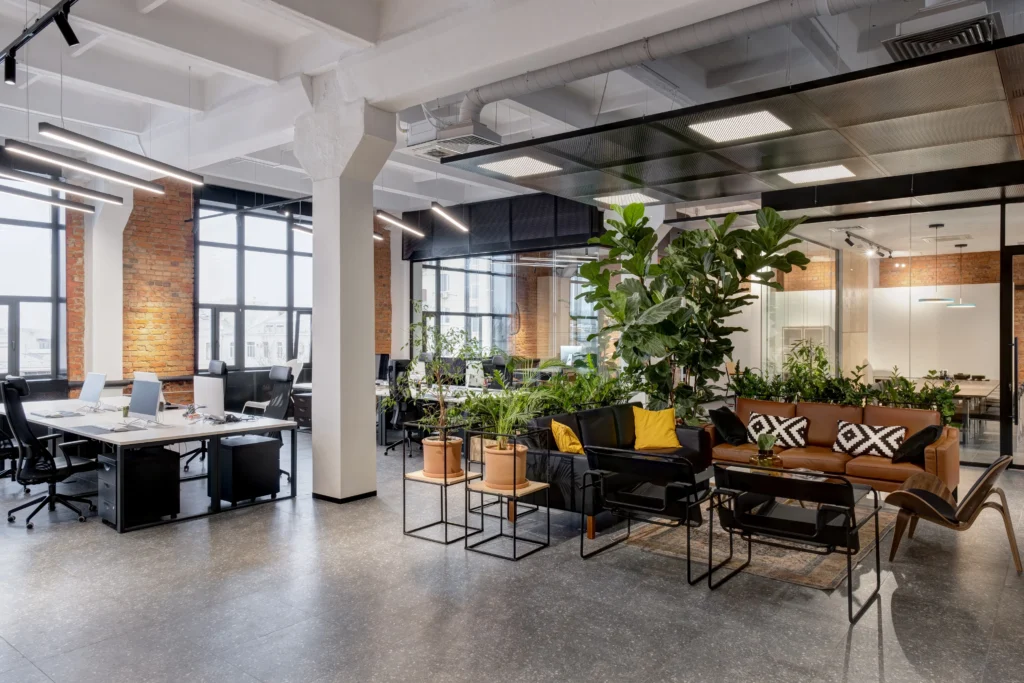
The first mistake is to design offices by default—by copying a competitor or focusing solely on reducing the cost per workstation. The most effective approach is the opposite: start with what you want your teams to feel and accomplish, and then translate that into the physical space.
A well-thought-out office layout sends a strong message: the company has designed its offices for today's needs, not yesterday's.
Measuring Actual Usage to Make Better Decisions
Designing a space is one thing.
Knowing whether it works is another.
One of the most common blind spots in corporate real estate management is the lack of reliable data on actual space occupancy. In France, the average office occupancy rate is less than 35%, which means that 65% of available space remains unused (Republik Workplace).
Yet real estate decisions are often made based on assumptions rather than data.
Occupancy dashboards make it possible to track utilization rates by zone and by hour, identify the most and least used spaces, and continuously adjust supply.
This is no longer just property management—it’s operational management.
Unused space is usually an unnecessary expense and often a sign that the layout does not match actual usage.
Paying Close Attention to the Details of the Everyday Experience
Beyond the physical layout, it’s the quality of the day-to-day experience that makes the difference.
A printer repaired quickly, a meeting room at the right temperature, an access badge that works, an incident reported and resolved: taken individually, these details may seem trivial.
Collectively, they form the foundation of trust that makes people want to come back.
An employee whose requests are handled quickly perceives their workspace—and, by extension, the company that manages it—in a different light.
Operational responsiveness is a form of consideration.
Digital Technology as a Driver of Consistency
The alignment between space and values isn’t limited to physical design.
The digital tools made available to occupants play an equally fundamental role.
From their phone, an employee can book a desk, see who will be there that day, or report a problem. These are simple actions, but they concretely embody the values of agility, transparency, and respect that the company champions.
Conversely, a fragmented digital experience—one tool for bookings, another for incidents, and a third for services—creates friction that contradicts the company’s original message.

What This Means in Practice
On Attractiveness and Retention
A workspace that aligns with your company culture is now a recruitment selling point in its own right. Candidates pick up on this during interviews. Employees value it in their day-to-day work.
Companies that invest in this alignment report retention rates significantly higher than the industry average.
For real estate asset managers, it’s also a factor in financial valuation: according to a JLL study, BREEAM- and HQE-certified offices command rents that are 8 to 15% higher and have vacancy rates half those of non-certified buildings.
The ROI of a Workplace Aligned with Company Values
The average cost of a workstation in France reached 11,051 euros in 2023, 61% of which was related to real estate (Source: IDET). With an average occupancy rate of 35%, there is considerable potential for optimization. Real estate decisions based on actual usage data, not on estimates.
This makes it possible to streamline space utilization, optimize costs, and reduce unresolved incidents.
SaaSOffice: The Platform for Managing Your Spaces Experience
Aligning values, spaces, and everyday experiences requires the right tools.
SaaSOffice is a SaaS workspace management platform that centralizes all building-related functions—from desk bookings to access management, incident tracking, and occupant services—into a single cloud-based application.
Where most companies juggle multiple tools that don’t communicate with each other, SaaSOffice offers a single point of entry for employees, visitors, and facility management teams.
Every interaction with the space—booking a room, reporting an issue, or accessing a service—is handled through a single interface, which simplifies the daily experience and encourages adoption.
For executives and facility managers, the platform generates real-time occupancy data that enables real estate decisions to be made based on objective facts rather than assumptions.
Designed to adapt to both single-site and multi-site networks, the platform is modular: you activate the features you need and SaaSOffice supports you as your business grows.
Discover how SaaSOffice transforms your workspace into a vehicle for corporate culture.
In conclusion
Aligning a company’s values with its workspaces isn’t just an HR or real estate issue—it’s a strategic decision.
Successful companies are those that have turned their offices into desirable, well-managed spaces that are consistent with their values.
This requires careful consideration of office layout, a clear hybrid work policy, digital tools that streamline the daily experience, and data to continuously monitor and adjust.
Turn your offices into a performance driver—our teams will show you how in 30 minutes.
Photo credit: we.bond.creations, Petinovs, insta_photos, Dragana Gordic – stock.adobe.com