Access Control for Businesses: A Comprehensive Guide to Securing Your Premises
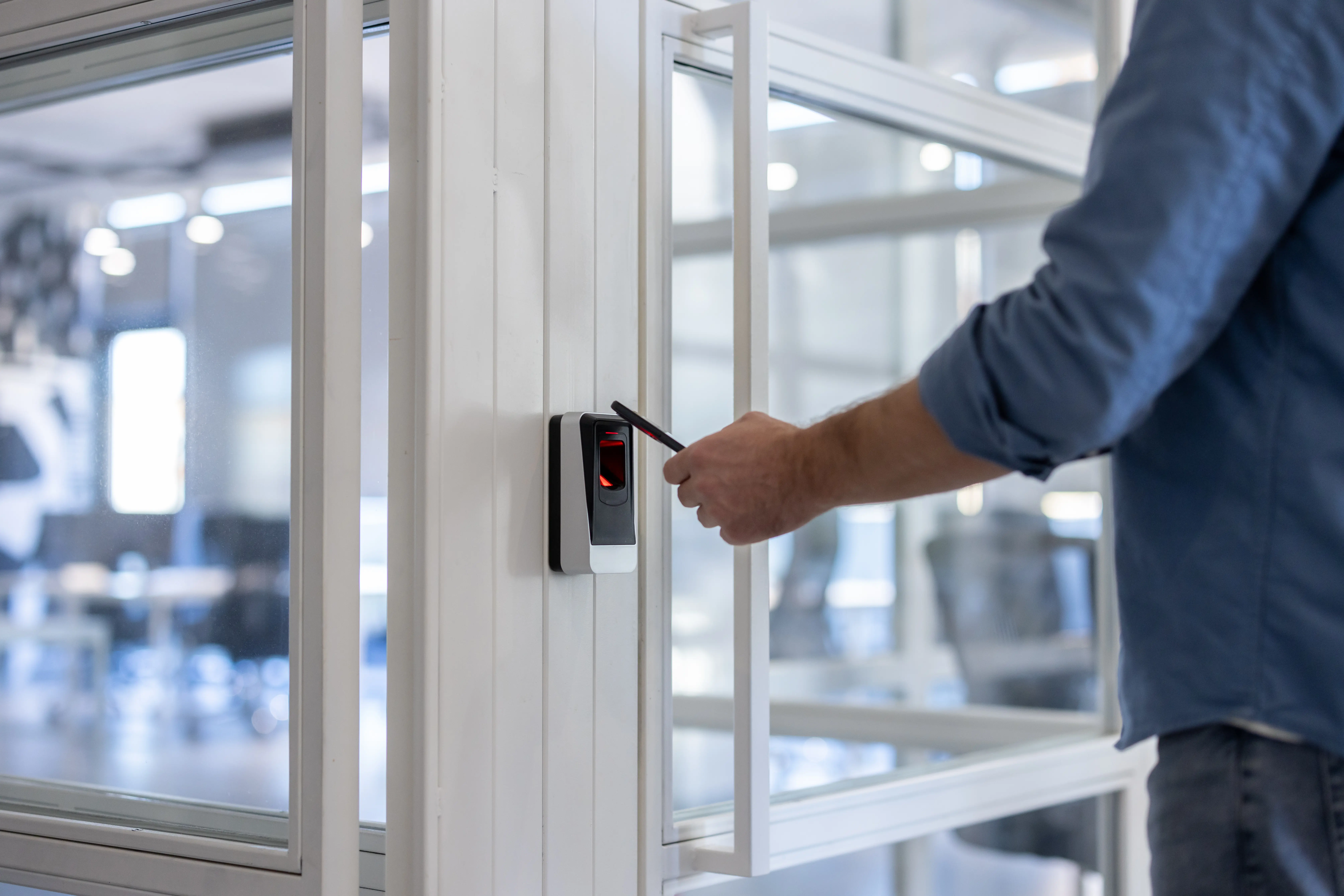
Corporate access control encompasses all systems that grant entry to a building, a floor, or a sensitive area. It ensures that each space is accessible only to authorized individuals, at the right time and in the right place. In the era of hybrid work and hot-desking, securing your facilities has become a key driver of performance, compliance, and peace of mind for organizations. This guide covers the fundamentals of access control, the technologies available today, and a clear method for deploying a solution tailored to your specific challenges.
What is access control in a business setting?
Corporate access control is a system that manages access permissions to physical or digital spaces. It links an identity (an employee, visitor, or contractor) to specific rights and then verifies those rights at each access point. In practice, an access control system replaces the traditional key with a remotely managed authorization system. Every time a door is opened, the event is tracked, and access rights can be updated with just a few clicks to reflect new hires, departures, and job changes.
Physical Access Control and Logical Access Control
The industry distinguishes between two major, complementary categories. Physical access control protects buildings, floors, server rooms, and parking lots. Logical access control protects networks, files, and business applications. These two areas are now converging toward unified identity management. Approximately 61% of companies are deploying authentication frameworks tied to employee roles, and 52% are integrating their physical access controls into their IT security architecture. (Source: Global Growth Insights)
The Components of an Access Control System
An access control system is based on four components. Readers installed at access points scan an identifier. This identifier can be a badge, a smartphone, or biometric data. A central management unit then centralizes decision-making, while management software defines access rights, reviews history, and generates reports. This architecture provides complete visibility into the flow of people within your facilities.
Why Securing Your Company's Premises Has Become a Priority
Securing a company’s premises protects people, physical assets, and the organization’s confidential data all at once. Demand for these solutions is growing rapidly, driven by the digital transformation of buildings and the widespread adoption of new ways of organizing work. The global access control market illustrates this trend: it is projected to reach $6.28 billion in 2025 and is expected to climb to $15.73 billion by 2035, representing an annual growth rate of 9.62%. (Source: Global Growth Insights)
Protecting People, Property, and Data
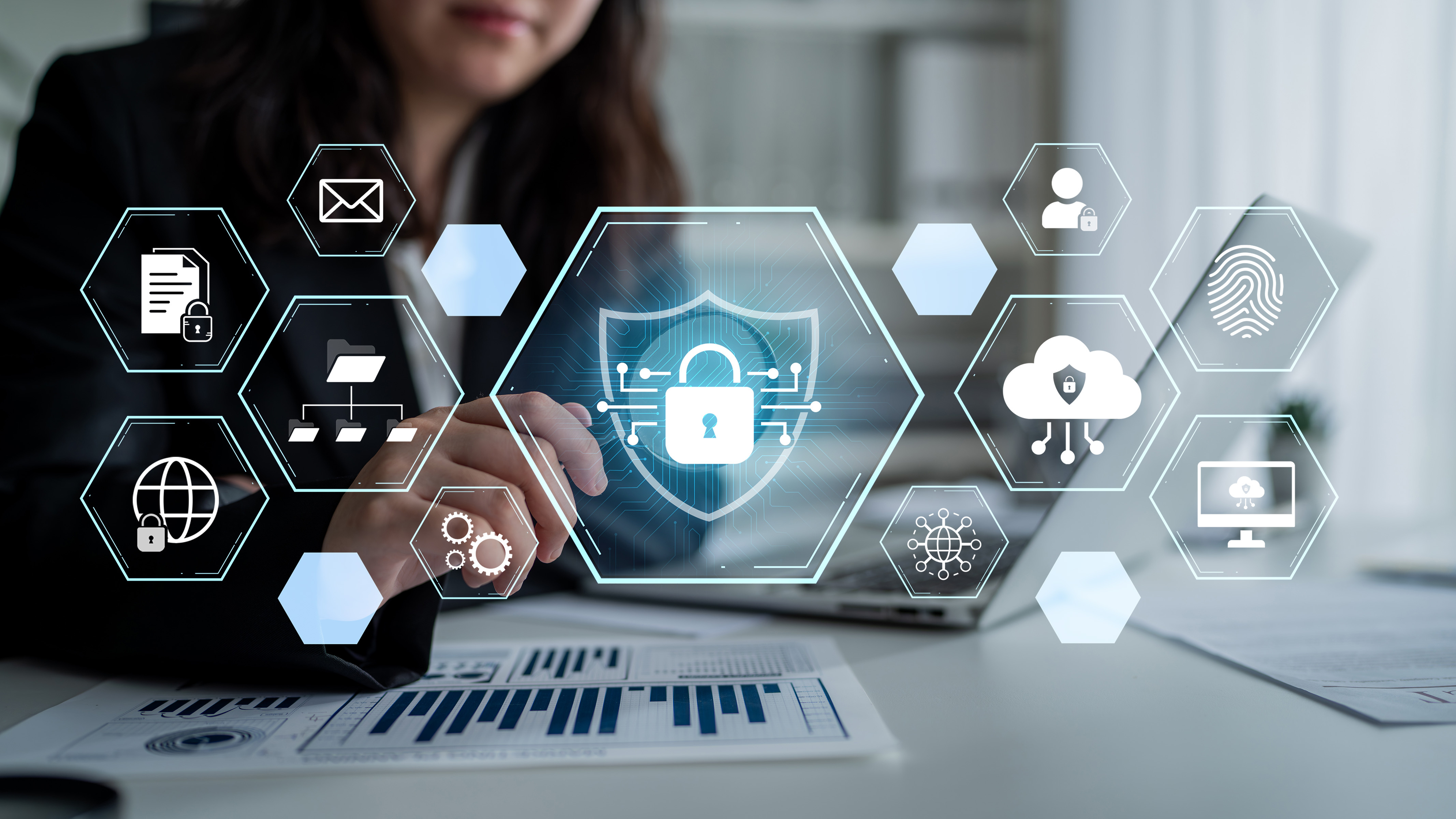
The primary purpose of access control is to restrict access to each area to authorized individuals. Server rooms, laboratories, and storage areas require stricter access controls than open workspaces. This level of granularity also protects sensitive data. By limiting physical access to IT equipment, you enhance GDPR compliance and the overall security of your information system.
Adapting to Hybrid Work and Unassigned Workstations
Hybrid work is profoundly transforming access management. Without assigned workstations, employees no longer follow a fixed schedule: they come in according to their own schedules, book a desk on a day-to-day basis, and move between multiple areas or even multiple sites. Access control must therefore rely on personalized schedule management, capable of generating temporary access rights tailored to each person’s actual presence rather than to a fixed workstation. This dynamic approach prevents outdated access permissions, simplifies attendance tracking, and ensures that every access event remains consistent with the day’s schedule.
Which access control technologies should you choose?
The choice of access control technology depends on your security requirements, your budget, and the user experience you want to provide. Today, there are three main solutions: access cards, mobile IDs, and biometrics.
From Physical Badges to Mobile Badges: Leveraging Complementarity
Badges remain a widely used solution, thanks to their simplicity and cost-effectiveness. The goal is not to pit physical badges against digital solutions, but to choose a technology that allows both to coexist. A company can thus retain its physical badges for certain uses while deploying a mobile badge for other employees, without disruption or duplicate investment. This hybrid approach facilitates a gradual transition: 54% of companies planned to adopt mobile access control within three years, according to a leading industry survey (Source: Fortune Business Insights). The mobile badge streamlines check-ins, check-outs, and multi-site management, while still allowing companies to retain physical badges for visitors or occasional service providers.
Biometrics and Cloud-Based Access Control
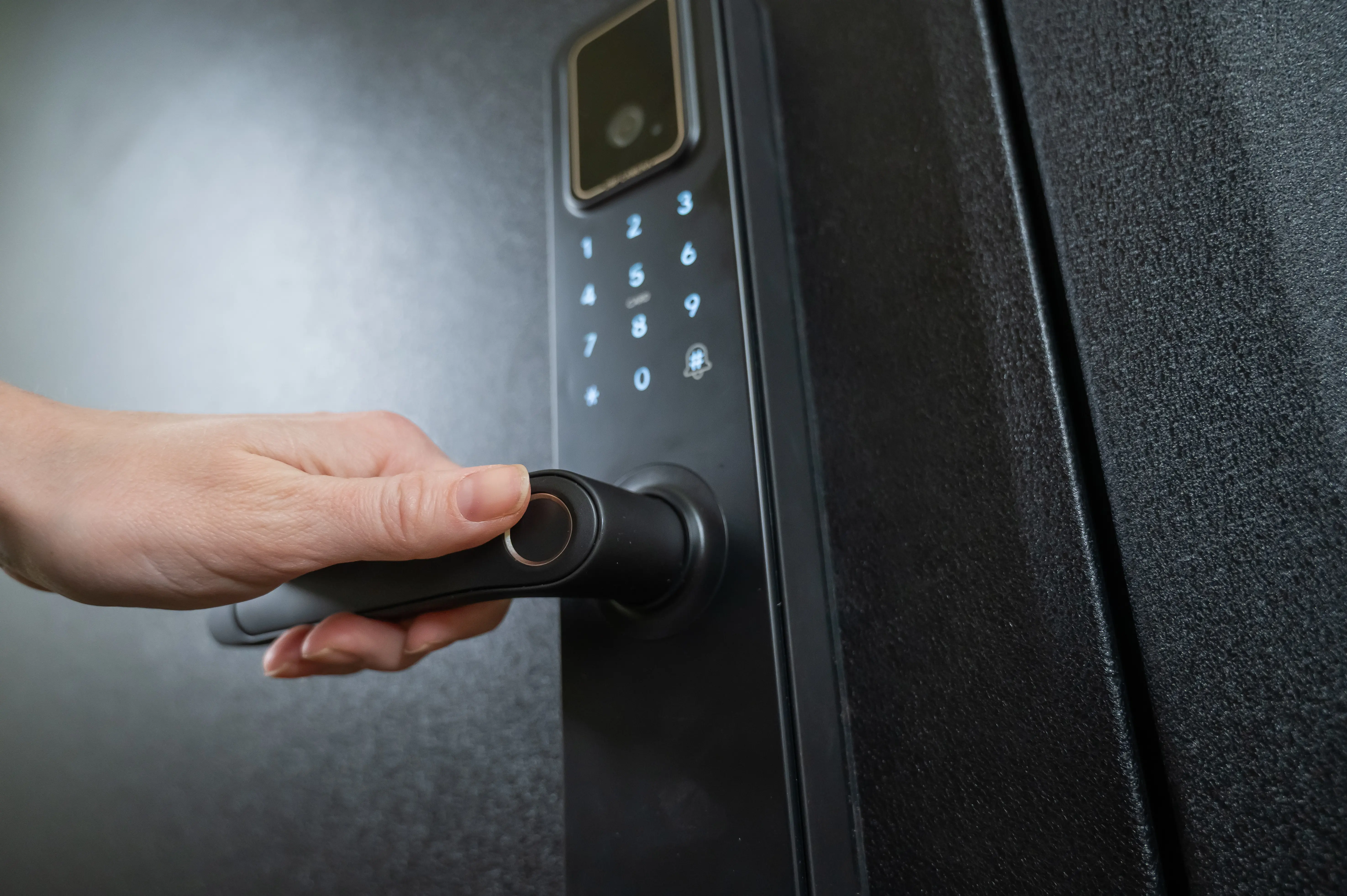
Biometrics (fingerprint, facial recognition, iris) provides a high level of security for the most sensitive areas, as it links access to a characteristic unique to each individual. It is particularly well-suited for data centers and industrial sites. Cloud-based access control, meanwhile, appeals to organizations with multiple sites. It centralizes management, enables remote monitoring, and simplifies updates, making it a preferred option for growing companies, regardless of the combination of technologies they choose.
How to Implement Effective Access Control at Your Premises
A successful deployment follows a simple approach: identify needs, define permissions, and then centralize management. This method ensures robust security while maintaining the smooth flow of daily operations.
Map areas and define access rights
The first step is to classify your spaces based on their sensitivity. An open reception area, an open-plan office, a meeting room, and a server room each require different rules. You then assign permissions by profile rather than by individual, which greatly simplifies management. This role-based approach remains effective even as teams change or new employees join.
Centralize access and visitor management
Centralization is at the heart of modern access control. Bringing together access control, space bookings, and visitor management within a single interface provides a unified view and saves teams valuable time. This is precisely the approach taken by SaaSOffice, whose intelligent voice assistant, NOVA, centralizes access control, space bookings, and visitor management within a single platform. An expected visitor is thus granted temporary access, and the reception team maintains complete visibility into all entries. In fact, visitor reception deserves special attention: it’s often the first point of contact with your company, and a poorly managed process can undermine the entire security chain put in place upstream.
Access Control: A Cornerstone of the Workplace Experience
Today, access control goes beyond its sole security function to become a cornerstone of the workplace experience. A workplace experience platform centralizes space bookings, access control, and occupant services within a single application. This convergence transforms every entry into a seamless journey: an employee books a desk, unlocks the door from their smartphone, and accesses everyday services—all from a single interface. SaaSOffice embodies this vision by placing the NOVA assistant at the center of the employee experience. For real estate departments and office managers, the challenge lies in balancing enhanced security with ease of use. Solutions that achieve this dual objective turn security into a competitive advantage and a sign of care for the teams.
In conclusion
Access control in the workplace is emerging as a strategic investment, at the intersection of security, compliance, and the employee experience. With the rise of flexible office arrangements and hybrid work, organizations stand to benefit from adopting a centralized, mobile, and scalable solution. By combining access control, space booking, and visitor management into a single platform, SaaSOffice and its NOVA assistant help secure your facilities while streamlining your teams’ day-to-day operations. The right solution protects your spaces today and supports your organization’s growth tomorrow.
FAQ: Access Control in the Workplace
What is access control in a business setting?
Corporate access control is a system that grants entry to a building, floor, or area based on defined permissions. It links each user’s identity to specific permissions and then verifies those permissions at each access point to restrict access to authorized individuals.
What are the different types of access control?
Access control falls into two complementary categories. Physical access control protects premises, floors, and sensitive areas. Logical access control protects networks and applications. Common technologies include access cards, mobile access cards, and biometrics, which are increasingly managed in the cloud.
How does access control adapt to a hybrid work model without assigned workstations?
Without assigned desks, employees come in according to their schedules and book their workspaces on a day-to-day basis. Access control must therefore be based on personalized schedule management, generating temporary access rights that align with actual presence. A centralized platform, such as SaaSOffice’s, is ideally suited to support this flexibility.
How much should you budget for an access control system?
The cost of an access control system depends on the number of doors, the technology chosen, and the hosting model. Access cards offer the most affordable entry-level option, while biometrics and cloud-based solutions meet more advanced needs. A scalable solution allows you to adjust your investment as your business grows.
Does access control improve the employee experience?
Yes, a well-designed access control system streamlines daily operations while enhancing security. By centralizing access, space bookings, and services within a workplace experience platform, it transforms every entry into a simple and pleasant experience, directly benefiting the comfort of the teams.
Photo credits: Liubomir, Mikhail Reshetnikov, InfiniteFlow – stock.adobe.com